
Research Backed Integration for Anxiety During a Spiritual Awakening

Anxiety can absolutely surface during a spiritual awakening. For many people, the two are deeply intertwined as the mind adjusts to new perceptions of self and reality. Start now: place both feet flat on the floor, take one slow breath, and check whether you have any thoughts of self-harm, an inability to function, or symptoms lasting weeks. If so, seek help immediately; if not, read on.
Key Takeaways
- Anxiety during spiritual awakening often involves sensory sensitivities and physical sensations that feel meaningful and are distinguishable from ordinary stress.
- Common risk factors include prior psychiatric history, past psychedelic use, prolonged solitary meditation, and exploration of occult topics, which can heighten vulnerability.
- Grounding techniques, movement, and acceptance-based mindfulness can effectively manage symptoms, especially when symptoms are connected to spiritual insight rather than dysfunction.
- Differentiating spiritual emergence from mental health crisis depends on the permanence, function, and meaningfulness of symptoms; urgent help is needed if suicidal thoughts or disorganization occur.
- Combining clinical support with spiritual guidance offers the safest, most effective approach, as grounding stabilizes the nervous system and enables meaningful insight to develop.
Table of Contents
- What Does Spiritual Awakening Anxiety Feel Like?
- Why Does Spiritual Growth Trigger Anxiety?
- Is This Anxiety or a Mental Health Crisis?
- How Do You Cope With Anxiety During Awakening?
- Who Faces Higher Risk During Spiritual Awakening?
- A Note From Phone Psychic Readers
- Our Take: Integration Beats Either/Or Thinking
- Get Immediate Perspective When You Feel Disoriented
- Sources
- FAQ
What Does Spiritual Awakening Anxiety Feel Like?
Anxiety during spiritual growth rarely announces itself in isolation. It usually arrives bundled with sensory and perceptual shifts that make ordinary life feel suddenly unfamiliar, which is exactly what makes it so disorienting.
People moving through a spiritual awakening commonly describe a cluster of signs that overlap but do not always appear together:
- Heightened sensitivity to light, sound, other people’s emotions, or even the “energy” of a room.
- Meaningful coincidences, or synchronicities, that feel too precise to be random.
- Existential questioning about identity, purpose, mortality, or the nature of reality itself.
- Sudden shifts in meaning, where familiar beliefs or relationships stop making sense the way they used to.
- Physical sensations such as waves of heat, tingling along the spine or scalp, a racing heart, or moments of derealization, where the world feels distant or unreal.
- Panic-like surges that come on fast, peak within minutes, and leave you shaky or exhausted afterward.
Not every combination points to a spiritual experience. Ordinary stress or sleep deprivation can produce racing thoughts and a pounding heart too. What tends to distinguish spiritual awakening symptoms from garden-variety anxiety is the presence of meaning: the racing heart shows up alongside a sense that something significant is unfolding, not just dread about a deadline or bill. When physical symptoms occur without any accompanying sense of insight, expansion, or connection, ordinary anxiety is the more likely explanation. When they occur alongside a felt sense of opening, unusually vivid dreams, or a pull toward introspection, spiritual emergence is the more fitting frame. Either way, the physical sensations themselves deserve the same respect and the same grounding response.
Why Does Spiritual Growth Trigger Anxiety?
Anxiety during spiritual growth is not a sign that something has gone wrong. It’s often the nervous system doing exactly what it’s built to do when it’s asked to process too much, too fast.
A few mechanisms explain most of what people experience:
- Nervous-system dysregulation. Rapid shifts in consciousness or perception can overwhelm the body’s stress-response system, producing the same physiological signature as a panic attack: elevated heart rate, shallow breathing, and a flood of adrenaline.
- Identity disruption. When old beliefs about who you are start to loosen, the mind treats that instability as a threat, even when the underlying change is positive. Cognitive reframing of this scale takes time, and anxiety is often the byproduct of that lag.
- Trauma activation. Intense meditation, breathwork, or psychedelic use can surface unresolved trauma the nervous system had previously kept sealed off, and that surfacing frequently arrives as fear before it arrives as insight.
- Sensory and affective intensity. Research on spontaneous spiritual awakenings documents genuine physical and emotional effects, including panic, sensory distortion, and periods of acute distress that researchers sometimes call spiritual emergency. These states can resemble psychopathology without being identical to it.
Kundalini-like experiences deserve a specific mention here. Studies on Tantric Yoga meditation describe measurable sensory, motor, and affective phenomena, tingling, involuntary movement, waves of emotion, that are more physical than many other spiritual experiences. These effects are usually manageable inside a structured, supervised practice, but they can produce real distress when they show up unsupervised in someone already carrying vulnerability.
Is This Anxiety or a Mental Health Crisis?
Spiritual emergence and clinical anxiety can look nearly identical from the outside, which is exactly why so many people struggle to name what they’re going through. The difference usually comes down to permanence, function, and content.
Seek urgent help immediately if you notice any of the following:
- Suicidal ideation or thoughts of ending your life, even passing ones.
- Inability to care for yourself, including not eating, sleeping, or maintaining basic hygiene for more than a day or two.
- Sustained disorganization, where thoughts stop connecting logically for hours or days rather than minutes.
- Risk of harm to yourself or others, including impulsive or aggressive behavior that feels out of character.
Beyond those emergency markers, a few differentiation cues help separate spiritual growth from a clinical episode. Spiritual insight tends to shift and evolve over days or weeks; fixed delusions tend to stay rigid and resistant to any new information. Functional impairment matters too: feeling shaken after a synchronicity is different from being unable to hold a job or a conversation for weeks at a stretch. And spiritual content usually connects to something meaningful, love, purpose, connection, even when it’s frightening, while clinical anxiety often fixates on threat without any accompanying sense of significance.
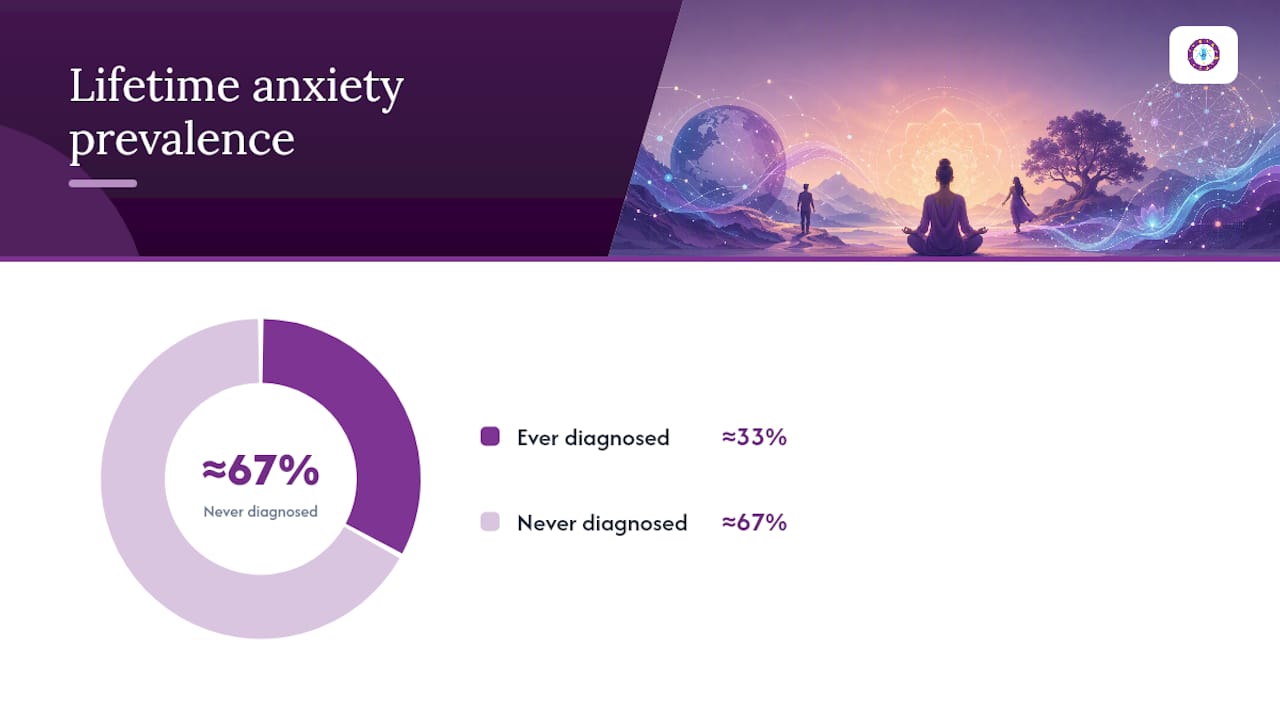
Nearly one-third of American adults will experience a diagnosable anxiety disorder at some point in their lives, so overlap between spiritual and clinical experiences is common rather than rare. When symptoms are severe, persistent, or interfering with daily life, a licensed mental health professional can assess what’s happening without dismissing the spiritual dimension of it. Cognitive behavioral therapy is considered the gold standard treatment for anxiety, and acceptance and commitment therapy, along with medication where appropriate, are also well-supported options. A primary care doctor, a therapist directory through your insurance provider, or a local community mental health center are all reasonable starting points for finding support.
How Do You Cope With Anxiety During Awakening?
Overcoming spiritual anxiety rarely requires dramatic intervention. It usually comes down to a handful of small, repeatable practices that calm the body enough for the mind to catch up.
- Ground yourself physically. Try 5-3-7 breathing: inhale for five counts, hold for three, exhale for seven. Pair it with a slow body scan or simply pressing your feet into the floor and naming five things you can see.
- Move your body. A short walk, gentle yoga, or even orienting to sounds and textures around you helps regulate a nervous system stuck in overdrive. Movement discharges the physical charge that panic and awakening both generate.
- Practice acceptance-based mindfulness. Instead of fighting the sensations, notice and name them: “This is a wave of heat. This is fear.” Research on mindfulness training built around monitoring and accepting internal states shows this approach broadens awareness and increases access to positive affect during stress, compared with simply trying to suppress what you feel. If self-guided acceptance work isn’t enough, a therapist trained in ACT or CBT can teach the same skill with more structure.
- Lean on social and ritual support. Talk to a trusted friend, a spiritual mentor, or a support group that understands non-ordinary experiences. A short, paced ritual, lighting a candle, journaling for ten minutes, saying a specific intention, can create a container that makes the experience feel less chaotic.
Pro Tip: Keep a simple log of when anxiety spikes happen: time of day, what preceded it, and what helped. Patterns usually emerge within a week, and that pattern is often more useful than any single technique.
Spiritual emergencies are frequently made worse not by the experience itself but by the absence of an interpretive framework or support system around it. Integrating clinical support with spiritual guidance, rather than choosing one over the other, consistently reduces the risk of the experience tipping into genuine harm.
Who Faces Higher Risk During Spiritual Awakening?
Not everyone approaches spiritual growth from the same starting point, and some backgrounds raise the odds of a rough passage through it.
Survey research on emergent spiritual phenomena has identified a consistent set of risk factors: a prior psychiatric diagnosis, past psychedelic use, intense solitary meditation practiced outside a retreat setting, and prolonged contemplation of occult or metaphysical mysteries all showed up as strong predictors of later suffering. Interestingly, the same research found prayer carried a protective association, suggesting that structure and shared belief matter as much as the content of the practice itself.
Protective factors worth building into any spiritual practice include:
- Structured guidance from an experienced teacher or clinician familiar with these states.
- Community or prayer practices that provide shared language for what’s happening.
- Screening for prior trauma or psychiatric history before starting advanced techniques.
- Pacing practice intensity gradually rather than diving into extended retreats or high-dose experiences.
If you recognize several risk factors in your own history, the safest move is to slow down, pace any advanced meditative or breathwork practice, and consult a clinician familiar with spiritual emergence before pushing further.
A Note From Phone Psychic Readers
Jason, who has also written on physical symptoms tied to third-eye opening, notes that immediate perspective can ease the disorientation of awakening. Hand-vetted psychic readers are available, and some callers report feeling grounded after a session. Readings offer support and perspective. They are not a substitute for clinical care when red flags are present.
Our Take: Integration Beats Either/Or Thinking
The research on spontaneous spiritual awakenings and the clinical guidance from NIMH point toward the same conclusion from two different directions: this experience deserves to be taken seriously as both a spiritual event and a nervous-system event, not forced into one category at the expense of the other.
Where conventional advice falls short is in the false choice it often presents. Spiritual communities sometimes dismiss anxiety as a lack of surrender; clinical settings sometimes dismiss meaning-making as a symptom to medicate away. Neither extreme serves someone who is actually in the middle of this.
Prioritize the boring stuff first: sleep, breath, feet on the floor, a trusted person to talk to. Grounding is not the opposite of spiritual depth. It’s what makes depth safe to explore. Once the nervous system settles, the insight tends to stay; the panic rarely does.
— Jason
Get Immediate Perspective When You Feel Disoriented
This service exists for moments when your own thoughts feel too loud to sort through alone. A short phone session with a hand-vetted reader can offer emotional grounding, a fresh perspective on what you’re experiencing, and practical next-step suggestions without needing to wait weeks for an appointment.

Because readers are accepted only after a vetting process, you’re connecting with someone experienced rather than gambling on a stranger. Availability around the clock means you don’t have to wait for business hours to get guidance. A spiritual guidance reading by phone can help you make sense of synchronicities, existential questions, or a shifting sense of identity in real time. If you’re not sure which format fits, a general phone psychic reading is a reasonable place to start today, and it can complement, never replace, care from a licensed mental health professional when your symptoms call for it.
Sources
- Anxiety disorders | NIMH
- Spontaneous spiritual awakenings: Phenomenology, altered states, individual differences, and well-being - PMC
- Risk Factors for Emergence of Somatic Experiences and Subsequent Suffering | Psychological Science
FAQ
How Do I Stop Waking Up Anxious During a Spiritual Awakening?
Try grounding immediately upon waking: feet flat on the floor, 5-3-7 breathing, and naming five things you can see before checking your phone. Keeping a brief log of what precedes these episodes often reveals patterns, like late-night screen use or unprocessed dreams, that you can adjust within a week or two.
What Is the Spiritual Meaning of Anxiety?
Many spiritual traditions frame anxiety during awakening as a sign the nervous system is adjusting to new perceptions faster than it can integrate them, not as a punishment or failure. Clinically, it’s understood as nervous-system dysregulation triggered by rapid identity or perceptual shifts, and both framings can be true at once.
How Do I Calm Down Spiritually When Anxiety Hits?
Acceptance-based mindfulness, noticing and naming sensations rather than fighting them, has been shown to increase access to positive affect during stress compared with suppression. Pairing that with movement, a trusted support person, or a short ritual like journaling gives the moment structure without forcing it away.
What Is “the Spirit of Anxiety” People Talk About?
This phrase usually describes a sustained feeling that anxiety has become a persistent presence rather than an occasional visitor, often tied to unresolved fear or unprocessed experience. It’s not a formal clinical or diagnostic term, so if the feeling is constant or worsening, a licensed mental health professional can help determine what’s actually driving it.
Can a Psychic Reading Help With Spiritual Awakening Anxiety?
A reading can offer perspective, emotional grounding, and practical next steps when you feel disoriented, and Phonepsychicreaders’ psychic reading sessions are built for exactly that kind of real-time clarity. It works best alongside, not instead of, professional care if you’re experiencing red flags like suicidal thoughts or an inability to function.