
Test Dreams in 5 Steps: Spot Prophetic vs Anxiety Dreams
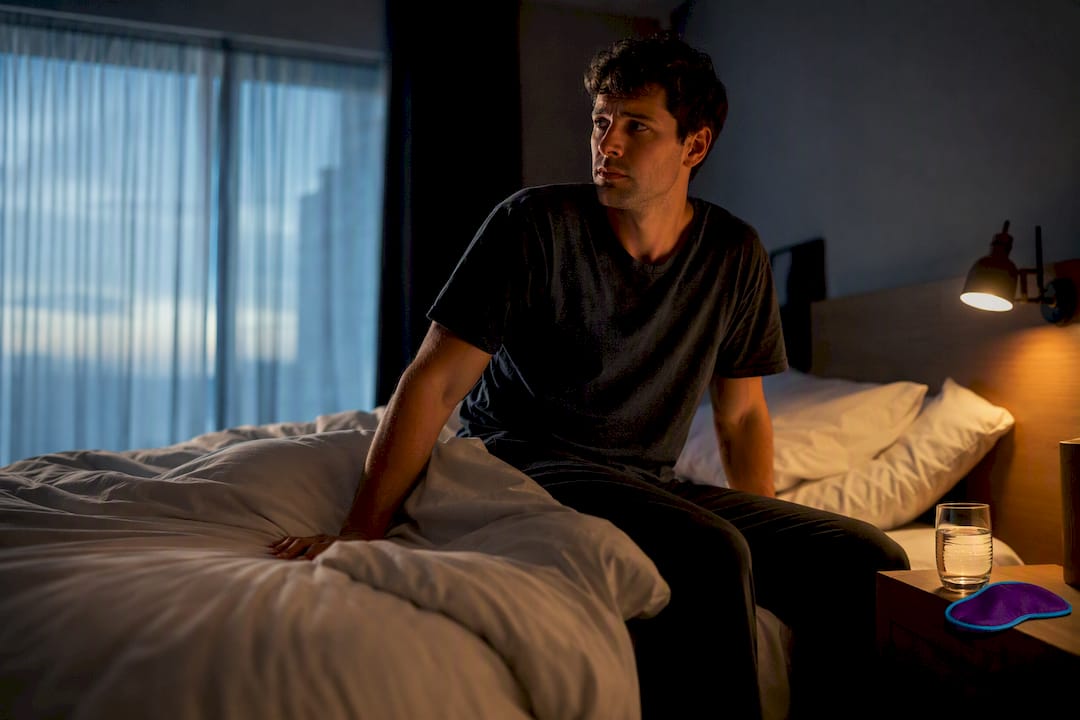
Most dreams that feel prophetic are your brain processing stress, not previewing the future. Healthline and Cleveland Clinic both frame anxiety dreams as the mind’s way of rehearsing waking worries during REM sleep, and vividness alone is not evidence of anything predictive. A small number of dreams, especially in religious or spiritual contexts, may carry genuine symbolic weight, but even those need testing before you act. Two things raise the bar: literal specificity and moral significance. Intensity alone does not. If a dream keeps repeating or wrecks your sleep, treat your sleep habits first and worry about meaning second.
Key Takeaways
- Most dreams that feel prophetic are actually the brain processing waking stress, and vividness alone does not indicate future prediction.
- Recurring, symbolic, and morally weighted dreams are the only types that might warrant testing, but they require patience and interpretation rather than immediate action.
- Addressing sleep quality and managing stress is crucial, as vivid or disturbing dreams often stem from physiological or emotional overload.
- Testing a dream’s specifics and context before acting reduces confirmation bias, which heavily influences perceptions of prophecy.
- Genuine prophetic dreams are considered rare and require careful discernment, interpretation, and validation, often outside the scope of scientific proof.
Table of Contents
- What Anxiety Dreams Look Like and Why the Brain Produces Them
- How Spiritual and Religious Traditions Define Prophetic Dreams
- A Simple Grounded Check You Can Use Now
- How to Reduce Distressing Anxiety Dreams and Care for Your Sleep
- How I Read Dreams and Advise Readers
- Clear Definitions: Prophetic Dreams vs. Anxiety Dreams
- Differentiating Between General Vivid Dreams and Specifically Prophetic Content
- How Cultural Background Shapes Dream Interpretation
- Talking About Your Dreams With a Doctor or Spiritual Advisor
- Psychological Explanations for Vivid Dreams Beyond Anxiety
- Scientific Research on the Predictive Validity of Dreams
- Confirmation Bias and Why Dreams Feel Prophetic
- What the Research Actually Supports
- If You Want Help Interpreting a Dream, Here’s What to Expect
- Sources
- FAQ
What Anxiety Dreams Look Like and Why the Brain Produces Them
Anxiety dreams have a recognizable cast of characters, and if you have had one, you already know the script. You are falling with no ground in sight. Someone or something is chasing you and your legs will not cooperate. You show up for a final exam or a big presentation with zero preparation, or you are late for a flight that is already boarding. These aren’t random. They map directly onto waking stress: fear of losing control, fear of being caught unprepared, fear of consequences you cannot outrun.
Common anxiety dream themes include:
- Falling from a height with no resolution
- Being chased by an unknown or faceless threat
- Missing a deadline, exam, or flight
- Teeth falling out or physical vulnerability
- Losing a job, a partner, or a sense of direction
During REM sleep, the brain’s emotional centers stay highly active while logical, sequencing functions dial down. That combination is why dreams can feel emotionally overwhelming and narratively disjointed at the same time. Cleveland Clinic explains that this is the brain amplifying emotional salience, not rehearsing a future event. Stress, trauma, certain medications, alcohol, and irregular sleep schedules all increase the odds of vivid or disturbing dreams.
Statistic Callout: Cleveland Clinic sleep experts note that dream intensity tracks emotional processing load, not predictive accuracy. If a dream feels urgent, that urgency is about what your nervous system is carrying, not what tomorrow holds.
If the same nightmare recurs several nights a week, or your sleep is regularly disrupted by dream distress, that pattern is worth raising with a doctor or therapist rather than a dream dictionary.
How Spiritual and Religious Traditions Define Prophetic Dreams
Faith traditions generally treat prophetic dreams as real but rare, and almost always symbolic rather than literal. GotQuestions notes that scripture presents such dreams as requiring interpretation, not simple decoding, and stresses that they are not scientifically verifiable events you can prove after the fact. A dream about water, for instance, might represent cleansing or upheaval depending on context, not an actual flood.
Discernment-focused ministries tend to look for a specific combination of markers before treating a dream as meaningful:
- Content that feels distinctly outside your normal thought patterns
- Recurring symbolic detail across multiple nights, not a one-off
- A clear moral or ethical dimension, not just fear or anxiety
- A sense of peace alongside the message, rather than pure dread
KnowTheAngels recommends writing the dream down immediately and resisting the urge to act impulsively, especially when the dream provokes fear. Spiritual counselors, across denominations, consistently caution against treating a single vivid dream as a mandate. The recommended posture is closer to patience than panic: bring the dream to trusted spiritual counsel, weigh it against your own moral framework, and let time and repetition confirm or dissolve its significance. Confusing an anxious dream for a prophetic one is common enough that most serious traditions build in a waiting period before anyone acts on it.
A Simple Grounded Check You Can Use Now
Before you decide whether a dream is prophecy or anxiety dreams doing their usual work, run it through a short, repeatable process. This costs you nothing and takes the guesswork out of the panic.
- Record it immediately. Time-stamp the entry and write down details, emotions, and what was happening in your waking life right before bed.
- Test for specificity. Verifiable specifics (a name, a date, a concrete step) carry more weight than atmospheric symbolism like darkness, water, or falling.
- Check the context. Recent news, a tense conversation, a movie, or an unresolved argument can seed dream content without you noticing.
- Record your interpretation prospectively. If you genuinely want to test a predictive claim, write down what you think it means before the day unfolds. Fitting a dream to an event after it happens is not a test, it is confirmation bias dressed up as evidence.
- Wait 24 to 72 hours before acting. If the dream involves a genuine safety concern, address it through practical checks (a phone call, a doctor’s visit, a locked door), not dramatic gestures.
Pro Tip: Keep your dream log and your interpretation in two separate entries, written at two separate times. That gap is what protects you from unconsciously rewriting the dream to match whatever happened later.
If sleep disruption or repeating nightmares are the real problem, a therapist or sleep specialist is the right call. If the content feels symbolic and morally weighted rather than simply frightening, spiritual counsel is the more useful next stop.
How to Reduce Distressing Anxiety Dreams and Care for Your Sleep
Whether a dream turns out to be prophetic-feeling or purely anxiety-driven, the care steps overlap almost completely, because both start with a nervous system that needs to settle down before bed.
Start with the basics:
- Keep a consistent sleep and wake schedule, even on weekends
- Power down screens at least 30 minutes before bed
- Keep the bedroom cool, dark, and used only for sleep
- Avoid alcohol and heavy meals close to bedtime, since both fragment REM sleep
A short pre-sleep routine matters more than most people expect. Try worry-journaling: write down what is unresolved before you get into bed, or use a literal “worry box” where you drop a written note and close the lid on it for the night. Slow breathing and a body scan for five minutes can lower the physiological arousal that feeds vivid, chaotic dreams.
If you wake from a bad dream, ground yourself before trying to fall back asleep. The 3-3-3 rule works well: name three things you see, three things you hear, and move three parts of your body. Follow it with a glass of water and slower breathing.

For recurring distress, cognitive behavioral therapy for insomnia (CBT-I), trauma-focused therapy, or a sleep medicine referral are legitimate next steps, not overreactions. Any recent medication change tied to new nightmares deserves a conversation with the prescriber.
Pro Tip: When journaling dreams, track the emotion and the trigger, not whether the details literally matched something later. Chasing literal matches is what keeps confirmation bias alive.
How I Read Dreams and Advise Readers
My stance, after looking at both the sleep research and the spiritual-discernment literature, is simple: test before you trust. Most dreams that feel urgent are your nervous system talking, not a message. A minority carry real symbolic weight, and those deserve patience, not panic.
Phone Psychic Readers vets its readers closely, accepting only a small share of applicants, and keeps dream interpretation readings available 24/7 for people who want a second, intuitive perspective on a dream that will not let go of them. If you book a session, bring your time-stamped notes and a short emotional summary rather than a vague memory. That preparation makes the conversation sharper and more useful, whether you are seeking spiritual insight or simply a grounded sounding board.
Clear Definitions: Prophetic Dreams vs. Anxiety Dreams
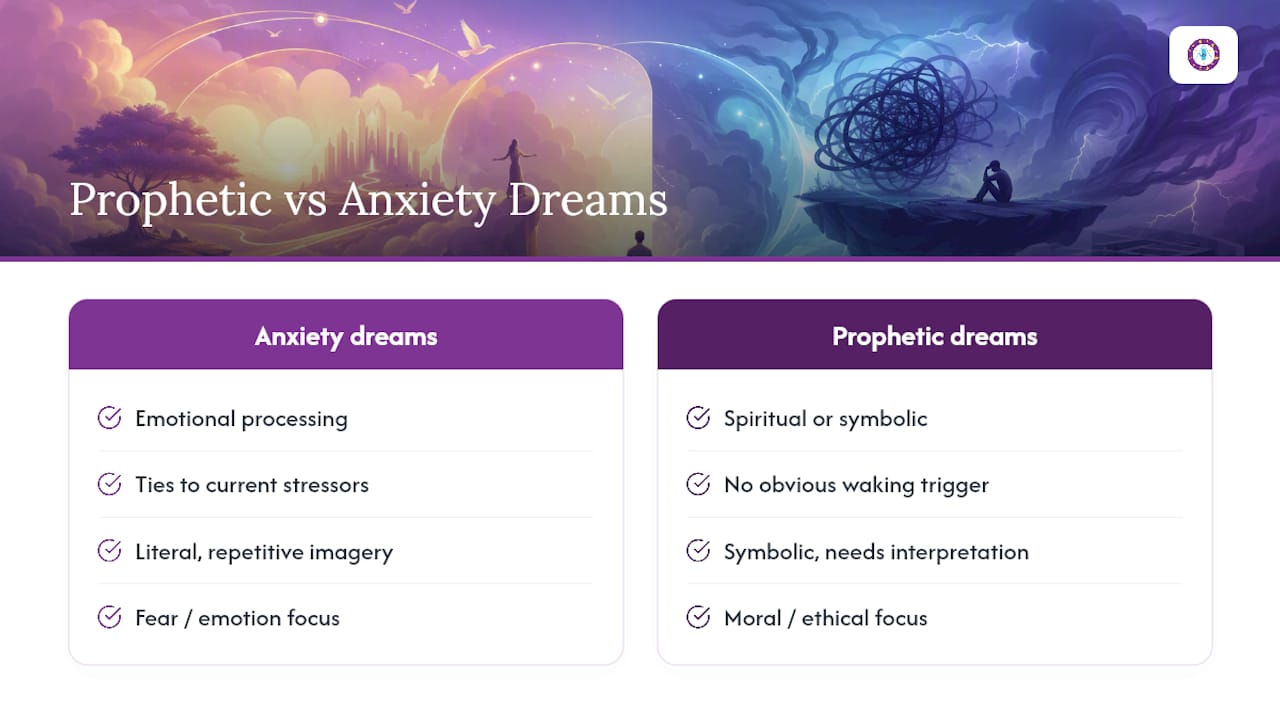
An anxiety dream is your brain rehearsing existing fears using literal, repetitive imagery pulled straight from your current stressors: the exam you are unprepared for, the relationship you are worried about, the deadline closing in. A prophetic dream, as most spiritual traditions describe it, is symbolic rather than literal, arrives without an obvious waking-life trigger, and typically requires deliberate interpretation rather than a plain reading.
The practical distinction comes down to origin and content. Anxiety dreams draw a fairly straight line back to something you already know you are worried about. Prophetic dreams, by contrast, tend to introduce imagery or a sense of foresight that does not correspond to anything currently on your mind, and often carries a moral or ethical dimension rather than pure fear.
Neither category is scientifically verifiable in the sense of being provable after the fact. GotQuestions is explicit that even genuine prophetic dreams, as scripture presents them, require interpretation and community discernment rather than a literal read. Anxiety dreams need no interpretation at all. They are usually a fairly direct translation of stress into imagery, and clinical sources treat them as ordinary emotional processing rather than a message to decode.
The overlap that trips people up: both types can feel intensely real and both can leave you rattled on waking. Emotional intensity is common to both categories, so it cannot be the deciding factor. What separates them is specificity, symbolism, and whether the content traces back to a known stressor.
Differentiating Between General Vivid Dreams and Specifically Prophetic Content
Vivid dreams are common and mostly explained by ordinary biology: fever, medication changes, alcohol withdrawal, sleep deprivation, and REM rebound after a disrupted night can all produce dreams that feel unusually sharp and memorable. Vividness by itself tells you almost nothing about meaning.
What separates a vivid dream from one that might warrant genuine prophetic consideration is a short list of features, not intensity:
- Content that is symbolic and layered rather than a direct replay of a recent worry
- A moral or ethical dimension, not simply fear or chaos
- Recurrence of the same symbol or theme across separate, unconnected nights
- A feeling of clarity or peace alongside the imagery, rather than pure dread
A dream where you are simply reliving a stressful meeting with exaggerated details is vivid but ordinary. A dream that introduces unfamiliar symbolic content, repeats across weeks, and carries a distinct moral weight is the kind spiritual traditions ask you to sit with and test, not dismiss outright and not act on immediately either. The Hypnos research on dream precognition found no replicable evidence that dreams predict specific future events beyond chance, which is exactly why the specificity and moral-weight filters matter more than how intense the dream felt.
How Cultural Background Shapes Dream Interpretation
Culture does most of the work in deciding whether a dream gets labeled prophecy or dismissed as noise. In many Christian and Jewish traditions, dreams have scriptural precedent as a channel for divine communication, which means a vivid dream is more likely to be brought to a pastor or elder for interpretation rather than a doctor. In some Indigenous and West African spiritual frameworks, dreams carry ancestral or communal significance, and interpretation often happens collectively rather than individually.
Secular, clinically oriented cultures tend to route the same vivid dream toward a psychological explanation first: stress, medication, sleep debt. Neither framework is wrong on its own terms, but the label a dream gets often has more to do with the interpreter’s cultural toolkit than with anything intrinsic to the dream itself.
This matters practically because the same falling dream or chase dream can be read as an anxiety symptom in one household and a warning sign in another. If you grew up in a tradition that takes dreams seriously as spiritual communication, dismissing every vivid dream as “just stress” can feel like ignoring a real channel of insight. If you grew up in a more secular environment, treating a dream as literal prophecy can feel like superstition. The grounded check outlined earlier works across both frameworks, because it tests the dream’s content rather than assuming an answer based on where you were raised.
Talking About Your Dreams With a Doctor or Spiritual Advisor
How you frame a dream conversation depends heavily on who you are talking to, and mixing the two audiences usually backfires.
With a doctor or therapist, lead with function, not meaning: how often the dream occurs, how much it disrupts your sleep, whether it is tied to a recent medication change or a traumatic event, and how you feel the next day. Clinicians are trained to evaluate frequency, intensity, and impairment. They are not the right audience for “what does this symbol mean,” and pushing symbolic interpretation into a clinical visit can derail a conversation that should be about sleep quality and mental health.
With a spiritual advisor or trusted faith leader, bring the content itself: the specific imagery, the emotional tone, whether it repeated, and any moral weight you sensed. Most discernment-minded counselors will ask you the same questions outlined in the grounded check: was it symbolic or literal, did it recur, and does it align with your existing values. Come with your written, time-stamped notes rather than a reconstructed memory. That single habit, carrying an actual record instead of a vague retelling, is what separates a productive conversation from one built on guesswork on both sides.
Psychological Explanations for Vivid Dreams Beyond Anxiety
Anxiety is a major driver of vivid dreaming, but it is far from the only one. General life stress, even without a diagnosable anxiety disorder, reliably produces more intense and memorable dreams, especially during periods of major transition like a move, a breakup, or a new job.
Post-traumatic stress disorder produces a distinct dream pattern: recurring, often near-literal replays of the traumatic event, frequently accompanied by physical symptoms like sweating or a racing heart on waking. This differs from ordinary anxiety dreams in both content and intensity, and it typically calls for trauma-focused therapy rather than general sleep hygiene alone.
Medication changes, particularly antidepressants and certain blood pressure medications, are a well-documented cause of vivid or unusual dreams. Alcohol and sleep deprivation both increase REM rebound, the phenomenon where the brain compensates for lost REM sleep with unusually intense dreaming once sleep resumes. Fever and illness can also produce vivid, sometimes bizarre dream content unrelated to emotional stress at all.
The throughline across all these causes is the same: the brain is working through something, whether that something is emotional, chemical, or physiological. None of these mechanisms point toward prediction. They point toward processing, which is exactly what Cleveland Clinic’s sleep research describes.
Scientific Research on the Predictive Validity of Dreams
Controlled research on dream precognition has not produced replicable evidence that dreams predict future events beyond ordinary chance. The Hypnos review of dream-prediction claims found that reported “hits” are almost always identified retrospectively, after the predicted event has already happened, which makes the match easy to construct and impossible to falsify.
Peer-reviewed sleep science, including work indexed on PubMed, supports a different function for dreaming: emotional and affective processing during REM sleep, not forecasting. Dreams appear to help consolidate memory and regulate mood, which is a well-established, testable mechanism, unlike precognition, which has never held up under controlled conditions.
None of this means every dream reported as prophetic is fabricated or meaningless. It means the scientific evidence supports emotional processing as the primary function of dreaming, while claims of literal prediction remain untested by any rigorous method that controls for memory bias and selective reporting. That gap between what people experience and what can be proven is exactly why testing a dream prospectively, rather than fitting it to events after the fact, matters so much.
Confirmation Bias and Why Dreams Feel Prophetic
The single biggest reason dreams feel prophetic after the fact is confirmation bias. You dream about a car accident, forget about it for two weeks, then hear about a friend’s fender bender and suddenly the dream feels like a warning you should have heeded. What actually happened is that your brain generated a common, statistically unremarkable dream image, and your memory retroactively linked it to an unrelated event.
This works because human memory is reconstructive, not a fixed recording. Once an event occurs, your brain searches for prior evidence that could explain it, and a vague or symbolic dream is flexible enough to fit almost any outcome. A dream about “loss” can be stretched to match a breakup, a job change, a death, or a lost set of keys, depending on what actually happens afterward.
Hypnos’s analysis of prophetic dream claims points to this exact pattern: the dreams people remember as prophetic are the rare hits, while the far more numerous misses, dreams that predicted nothing, are simply forgotten. That selective memory creates the illusion of a much higher hit rate than actually exists.
The fix is the same prospective recording method covered in the grounded check: write down your interpretation before the outcome is known. If you only ever evaluate dreams after events unfold, you are not testing prophecy. You are watching confirmation bias do its work in real time.
What the Research Actually Supports
Here is where I land after weighing the sleep science against the spiritual-discernment literature: the honest answer is that most of what gets called a prophetic dream is your nervous system doing ordinary, well-documented work, and treating every vivid dream as a message is where people get into trouble.
Conventional advice tends to swing to one extreme or the other. Secular sources sometimes dismiss dream symbolism entirely, which ignores centuries of thoughtful, non-hysterical spiritual discernment practice. Spiritual sources sometimes skip the testing step and treat urgency as proof, which is exactly backwards. The dreams worth taking seriously are calm, specific, and recurring. The dreams that feel like emergencies almost never are.
If you take one thing from this: prioritize your sleep and your stress levels before you prioritize interpretation. A rested nervous system produces fewer chaotic dreams and gives you a clearer head when a genuinely symbolic dream does show up. Testing comes second. Panic should not come at all.
— Jason
If You Want Help Interpreting a Dream, Here’s What to Expect
If you have run the grounded check and still feel unsettled, Phone Psychic Readers offers a direct way to talk it through with a real person instead of guessing alone. Every reader on the platform goes through a strict vetting process, and only a small percentage of applicants make it through, so you are connecting with someone experienced rather than a random guess. Readings are live, over the phone, available 24/7, and billed per minute with a discount for first-time callers; please see the service website for current pricing details.
A reading is not a replacement for a doctor or a therapist. It works best as a complement: an intuitive, emotional perspective on symbolism and timing that sits alongside whatever clinical care you already need. If your sleep is genuinely disrupted or your anxiety is severe, address that first with a professional, then use a reading to talk through meaning once you are stable.
To get the most out of a call, bring your time-stamped dream notes, a short summary of what you were feeling on waking, and one or two specific questions rather than “what does this mean.” That preparation is the difference between a vague session and a useful one. If a big life decision is riding on the dream, say so upfront so your reader can focus the call where it counts. You can also browse available readings to find the format that fits your question best.
Sources
For the clinical side of anxiety dreams and REM processing, see Healthline and Cleveland Clinic, along with peer-reviewed work indexed on PubMed. For spiritual discernment frameworks, GotQuestions and KnowTheAngels offer grounded, non-alarmist guidance. For a reflective nightly practice, the Examen Prayer provides a simple structure for processing the day before sleep.
- Anxiety dreams: Causes, meaning, and how to stop them | Healthline
- Stress dreams: why do we have them and how to stop | Cleveland Clinic
- Are prophetic dreams from God? | GotQuestions
- Representative peer-reviewed article on dreaming and affect (PubMed)
FAQ
How Do You Know if You’re Having Prophetic Dreams?
Look for symbolic content rather than literal replay, a moral or ethical weight, and recurrence across separate nights, then record and test the dream prospectively before treating it as confirmed.
Can Anxiety Manifest Into Dreams?
Yes. Anxiety routinely shows up in dreams as falling, being chased, missing deadlines, or losing control, since REM sleep amplifies emotional content tied to waking stress.
Why Am I Having Prophetic Dreams?
Most dreams that feel prophetic are actually your brain processing recent stress or pattern recognition from things you already noticed; genuine prophetic content, per most faith traditions, tends to be rarer, symbolic, and confirmed through testing rather than gut feeling alone.
What Does God Say About Prophetic Dreams?
Scripture presents prophetic dreams as possible but requiring interpretation and discernment rather than literal reading, and GotQuestions stresses they are not scientifically verifiable, so caution and counsel matter more than certainty.
Can Dreams Predict the Future?
Controlled research has found no replicable evidence that dreams predict specific future events beyond chance, and most reported “hits” are identified only after the fact, which points to confirmation bias rather than genuine foresight.