
Pregnancy Psychic Predictions: Comfort, Not Medical Proof

Psychics cannot medically confirm pregnancy, determine fetal health, or guarantee conception timing. What a reading can offer is emotional reflection and a sense of comfort while you wait for answers. For medical confirmation of pregnancy, timing, or genetic risk, an ob-gyn and standard prenatal testing remain the reliable path. This guide walks through the types of pregnancy readings, how to evaluate them honestly, and how to book one responsibly if you still want that extra layer of insight.
Key Takeaways
- Psychics cannot reliably determine pregnancy timing, fetal health, or sex, which are instead established through standardized medical methods like ultrasounds and genetic testing.
- Common psychic readings around pregnancy tend to be symbolic or thematic, often referencing numbers, seasons, or traits that cannot be confirmed or proven accurate.
- The small statistical effect observed in precognition research does not support using psychic predictions for individual pregnancy outcomes or timing.
- When choosing a psychic, verify transparent billing, avoid promises of guaranteed outcomes, and differentiate between emotional reflection and medical decision-making.
- Always consult medical professionals for pregnancy confirmation, fetal health, and genetic risks, and use psychic insights as optional emotional support rather than factual information.
Table of Contents
- Can a psychic predict pregnancy, conception timing, or a baby’s sex?
- Common types of pregnancy readings and what they typically cover
- How readers interpret timing and baby traits
- Reliability, evidence, and responsible boundaries
- Safety, red flags, and how to choose a pregnancy reader
- How to prepare for a pregnancy psychic reading
- Why these readings feel meaningful, and how to hold them lightly
- A vetted, phone-based option for pregnancy-related reflection
- Sources
- FAQ
Can a psychic predict pregnancy, conception timing, or a baby’s sex?
Clinicians establish pregnancy timing through specific, standardized methods, not impressions. According to ACOG’s committee opinion on due dates, first-trimester ultrasound measurement of crown-rump length is the most accurate way to establish gestational age, and estimated due dates should rarely change once set this way. That precision is exactly what a psychic reading cannot replicate, no matter how confident the impression feels.
The same is true for fetal health and sex. ACOG guidance on prenatal screening explains that cell-free DNA screening is sensitive but not diagnostic, meaning a positive result still requires genetic counseling and confirmatory testing before anyone treats it as fact. A psychic’s claim about a baby’s sex or health carries no equivalent verification process behind it.
Some people point to precognition research to argue that intuitive predictions have scientific backing. A 2016 meta-analysis of 90 precognition experiments did find a statistically small effect across the pooled data, but the authors were clear that reproducibility concerns remain and that the findings do not support relying on any single prediction for an individual person.
What this means in practice:
- Ultrasound and LMP dating, not symbolic dates from a reading, are the clinical standard for due dates.
- Screening tests estimate risk; only diagnostic testing confirms a genetic condition.
- Group-level research on precognition does not translate into proof for your specific reading.
- A psychic’s confidence in a prediction is not the same as clinical accuracy.
A 2016 meta-analysis of 90 controlled experiments found a small overall effect for precognition, but its authors caution that this does not establish reliable prediction at the individual level, according to the study.
Common types of pregnancy readings and what they typically cover
Pregnancy readings come in several formats, and knowing which one you’re booking helps you set the right expectations.
- Tarot readings interpret card symbolism around timing, emotional readiness, or the energy surrounding conception, often speaking in themes rather than dates.
- Astrology and birth-chart readings look at planetary placements to suggest windows of fertility or personality traits tied to a baby’s projected birth season.
- Clairvoyant and prenatal-medium readings describe impressions the reader says they’re receiving, sometimes framed as messages from a baby’s spirit or future self.
- Numerology readings assign meaning to birth dates or name numbers, often used to explore compatibility between parent and child.
- App-based and entertainment readings offer quick, generalized predictions meant for fun rather than depth, and typically carry the least specificity.
Tarot and clairvoyant sessions tend to lean symbolic and story-driven, focusing on feelings and themes you can reflect on afterward. Astrology and numerology sometimes get more specific with numbers or months, which makes them easier to check against outcomes, but also easier to misread as certainty. The types of psychic readings explained guide breaks down these formats in more depth if you want to match a style to your question.
How readers interpret timing and baby traits
Readers often lean on recurring numbers, seasonal references, or astrological placements to suggest when conception might happen. A reader might say “watch for the number three” or point to a particular month tied to your birth chart. Baby trait descriptions tend to follow a similar pattern: a reader might describe a strong-willed personality, a specific hair color, or a zodiac sign, and parents sometimes recall these details vividly once the baby arrives.
A few questions help you sort a testable impression from one that only sounds true after the fact:
- Did the reader name a specific window (a month, a season) or only a vague future?
- Was the trait description detailed enough to be wrong, or so general it fits almost any child?
- Could you have written the same prediction down and checked it against a calendar?
- Are you remembering the detail because it was accurate, or because it was memorable?
That last question matters most. Memory tends to favor hits and forget misses, which is part of why readings can feel more accurate in hindsight than they were in the moment.
Reliability, evidence, and responsible boundaries
The honest answer about reliability sits between dismissal and blind trust. For anything involving a due date, fetal health, or genetic risk, ACOG’s dating guidance and screening recommendations are the sources built for that job, because they rest on standardized measurement rather than impression.
Consumer protection matters here too. The FTC’s guidance on fertility claims warns that deceptive marketing around fertility, including services that promise guaranteed outcomes, can exploit people at an emotionally vulnerable time. The agency’s advice is straightforward: consult a clinician before making decisions based on a promise, and report marketing that feels manipulative.
Deceptive fertility claims and misleading advertising can exploit hope, and consumers should consult medical professionals rather than rely on unverified promises.
Small exploratory studies add texture without changing the bottom line. A 2022 prenatal-consciousness study reported some agreement between mediums and parental reports, but the sample was limited and the authors called the results preliminary, pending replication.
Where a service can add real value is in how it’s run, not in what it claims to predict. Some platforms accept only a small percentage of applicants through their vetting process, which can be a signal about reader experience even though it doesn’t turn a reading into a medical finding. For anything touching your health or your baby’s health, that vetting is a reason to trust the conversation, not a substitute for your ob-gyn.

Safety, red flags, and how to choose a pregnancy reader
Most people who explore pregnancy readings are looking for comfort, not a diagnosis, and a responsible reader will respect that distinction.
- Walk away from anyone who promises a guaranteed conception date or a certain outcome.
- Be wary of a reader who pressures you to stop medical care or delay seeing a doctor.
- Watch for repeated upsells that push you toward longer or additional paid sessions.
- Confirm per-minute billing terms before you connect, including whether hold time counts.
- Historical cases like the FTC’s action against Miss Cleo’s promoters show how unclear billing and deceptive advertising have shown up in this industry before.
Before paying for a reading, ask how billing works, how long the reader has focused on pregnancy topics, and what their refund policy covers if the call disconnects early. Combining a reading with clinical care means keeping your medical records, test dates, and doctor’s advice separate from anything a psychic tells you, so the two never get mixed together. The guide to choosing a phone psychic covers more of these signals in detail.
Pro Tip: Ask about billing and refund terms before the call connects, not after you’ve already been charged.
How to prepare for a pregnancy psychic reading
A little preparation keeps the session reflective rather than confusing it with medical fact.
- Write down your cycle dates, any test results, and recent ultrasound dates beforehand.
- Note your current symptoms and questions so the reader has context without you needing to explain everything live.
- Ask questions that invite reflection, such as what energy you’re carrying into this chapter, rather than asking for a diagnosis.
- Write down what stood out afterward, and if anything touches your health, bring it to your ob-gyn rather than acting on it alone.
Keeping your own dates as the anchor lets the reading add meaning without replacing what your clinician already knows.
Why these readings feel meaningful, and how to hold them lightly
Readings often land because they give shape to a season full of uncertainty, offering a reflective space as explored in this wellbeing blog. A vivid detail that turns out to match your experience can feel like confirmation, even when it’s really your memory doing some of the work. That doesn’t make the moment less real. It just means the feeling of confirmation isn’t medical proof. If you want that reflective space held by an experienced, vetted reader, Phone Psychic Readers is a transparent place to start.
— Jason
A vetted, phone-based option for pregnancy-related reflection
If you want a pregnancy-focused conversation with someone experienced rather than guesswork from an app, some phone psychic services connect you with hand-vetted readers who accept only a small share of applicants, so the person on the line has done this before. Sessions may be available 24/7, which matters when a question about timing or a baby’s energy hits you at 2 a.m. and won’t wait for office hours.
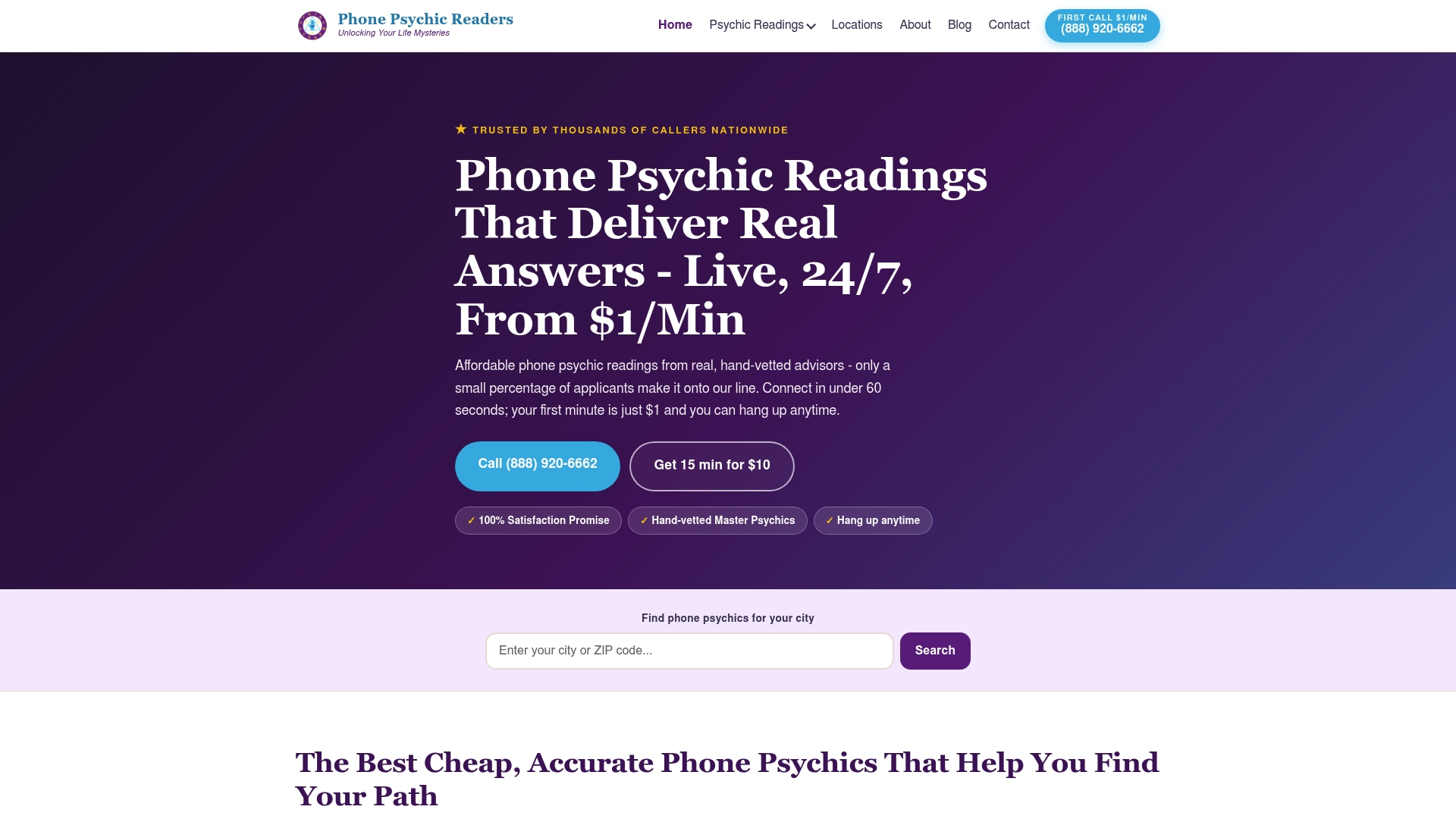
The platform offers several formats suited to pregnancy questions:
- Phone Psychic Reading for a general, open conversation about what you’re sensing.
- Personal Astrology Reading or Birth Chart Reading for timing and personality-focused questions.
- Tarot Card Reading for a symbolic look at where you stand emotionally.
Pricing runs per minute, so it’s worth checking the billing details on the booking page before your call connects. When you’re ready for a grounded, transparent conversation, book a phone psychic reading and bring your questions with you.
Sources
- Preconception care guideline summary (PubMed)
- Methods for estimating the due date | ACOG committee opinion
- ASCP summary of ACOG guidance on cfDNA-based NIPT
- Considering fertility products? Spot the fake claims | FTC
- Meta-analysis of precognition experiments (PubMed)
FAQ
Can babies sense pregnancy before you know?
There’s no medical evidence that a fetus, let alone another child, can sense a pregnancy before it’s confirmed by testing. Early physical or intuitive signs people notice in themselves usually reflect hormonal changes rather than any outside awareness. A home pregnancy test or blood test remains the only reliable way to confirm pregnancy early on.
What are spiritual signs of pregnancy in 2026?
People often describe vivid dreams, sudden intuitive nudges, or symbolic numbers as spiritual signs of pregnancy, and these can feel meaningful during the two-week wait. These impressions are personal and reflective rather than diagnostic, so they shouldn’t replace a pregnancy test. If you’re trying to conceive, a prepregnancy checkup is the recommended step to review your health and prepare for pregnancy.
Can a psychic tell me if I’m pregnant?
A psychic cannot confirm pregnancy with medical accuracy, since only a test or clinical exam can do that. A reading might offer emotional insight or a sense of what you’re carrying into this period of waiting, but it isn’t a diagnostic tool. If you suspect you’re pregnant, a home test followed by an ob-gyn visit is the direct path to an answer.
What are spiritual signs of pregnancy people report?
Commonly reported spiritual signs include recurring dream imagery, a felt sense of connection, or symbolic numbers appearing repeatedly. These are subjective experiences that vary widely from person to person and carry no diagnostic weight. Pairing curiosity about these signs with an actual pregnancy test keeps expectations grounded.
Should I trust a reading over a doctor’s timeline for conception?
No, clinical dating methods like ultrasound measurement are the accurate standard for timing, according to ACOG guidance. A reading can offer emotional perspective while you wait, but it shouldn’t influence decisions about fertility treatment or prenatal testing. Keep your clinician’s timeline as the source you act on.