
Composite Chart Reading: 6 Steps for Unknown Birth Times
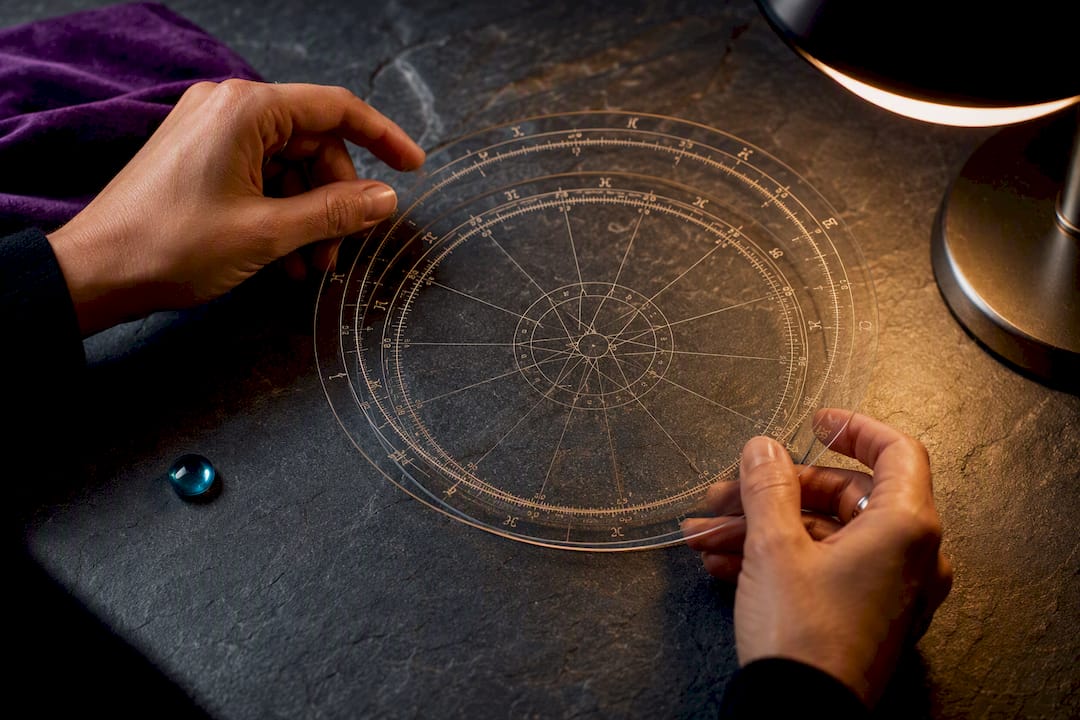
A composite chart reading shows you the relationship itself, as if it were a third person with its own Sun, Moon, and destiny. It’s built from the midpoints between two people’s planets, so it describes shared purpose and emotional climate rather than how you each individually experience one another. Pair it with synastry to see the give-and-take between two people, and with a Davison chart when you need real timing.
Key Takeaways
- Composite planets and aspects remain reliable indicators even with uncertain birth times, but angles and houses require precise timing for accuracy.
- Synastry reveals how individuals experience each other, while composite charts define the relationship’s core purpose, and Davison charts focus on timing and progressions.
- Key placements like the composite Sun and Moon highlight relationship purpose and emotional needs, with tight orb aspects being most influential in interpretation.
- When analyzing a composite chart, start with the Sun and Moon before layering in planetary aspects, then consider houses and angles only if birth times are verified.
- Combining synastry, composite, and Davison insights provides a fuller picture, especially when live readings help clarify conflicting signals or uncertain birth data.
Table of Contents
- What Is Composite Chart Reading and How Does the Midpoint Math Work?
- How Composite Charts Differ From Synastry and Davison Charts
- Key Composite Placements and What Each One Reveals
- A Reading Order That Works Every Time
- What Calculators Show You and Where People Misread Them
- Using Composite, Davison, and Synastry Together
- When a Live Reading Beats Guessing at Your Chart
- Ready to Talk Through Your Composite Chart With a Real Reader?
- Where to Verify Your Composite Chart Calculations
- Sources
- FAQ
What Is Composite Chart Reading and How Does the Midpoint Math Work?
A composite chart is built by finding the midpoint between each pair of matching planets and angles from two people’s birth charts. Take both Venus positions, find the exact degree halfway between them, and that becomes the composite Venus. Do this for every planet, the Ascendant, and the Midheaven, and you get a chart for something that never actually happened at a specific moment. It’s symbolic, not literal, which is exactly why some practitioners find it strange until they see how well it works.
That symbolic quality matters for accuracy. Planet placements and the aspects between them stay reliable even when you don’t know exact birth times, because sign positions rarely shift by more than a degree or two across a day. Angles behave differently.
- Composite Sun and planets: stable and readable even with approximate birth times.
- Composite Ascendant, Midheaven, and houses: highly time-sensitive and can shift entirely with an error of a few hours.
- Composite Moon: falls somewhere in between. It moves fast enough that unknown times introduce real uncertainty.
If you only have a rough birth time for one partner, trust the planets and aspects first. Treat any house or angle placement as a working theory until you confirm the time.
How Composite Charts Differ From Synastry and Davison Charts
Astrologers use three separate tools to answer three separate questions about a relationship, and confusing them is the most common mistake beginners make. Synastry overlays two natal charts and studies how each planet from one chart lands in the other person’s houses. It answers “how does she experience him” and “how does he experience her” as two distinct, sometimes contradictory, stories.
The composite chart treats the relationship as its own entity, separate from either individual, and answers “what is this relationship, at its core.” A Davison chart takes a different route entirely: it averages both birth dates, times, and locations into one real moment in history, producing an actual chart that can be progressed and hit by transits.
- Synastry reveals dynamics, attraction, and friction between two specific people.
- Composite reveals identity, purpose, and the felt character of the bond itself.
- Davison reveals timing, since it’s anchored to a real date that moves forward with the calendar.
A useful shorthand: composite is identity, synastry is dynamics, Davison is timing.
Key Composite Placements and What Each One Reveals
Once you’ve settled on the composite chart as your lens, certain placements carry more weight than others when it comes to relationship dynamics.
- Composite Sun. This is the relationship’s stated purpose. Read the sign for flavor and the house for the arena where that purpose plays out, whether that’s a 7th house partnership built on commitment or a 10th house pairing driven by shared ambition.
- Composite Moon. This shows the emotional weather the relationship lives in day to day, and what it needs to feel safe. A Moon in Cancer wants nurturing and routine; a Moon in Sagittarius wants freedom and shared adventure.
- Ascendant and Midheaven. These describe how the relationship presents to the outside world and what role it plays publicly. Angular planets here, meaning planets sitting close to these points, get amplified significance.
- Venus and Mars. Read these together, not separately. Venus shows how affection gets expressed; Mars shows how desire and conflict surface. Their aspect to each other tells you whether attraction and friction work with or against one another.
- Saturn. This marks where the relationship has to do real work. It’s rarely comfortable, but it’s often where the lasting structure gets built.
- Nodes and houses. The nodal axis points toward the relationship’s growth direction, while stelliums (clusters of planets in one house) show where the bulk of the relationship’s energy concentrates.
- Aspects, sorted by orb. The tightest aspects, meaning the smallest degree separation between two planets, carry the most weight. A conjunction at 1 degree matters more than a trine at 7 degrees.
Pro Tip: Don’t panic at a hard aspect like a square or opposition between composite Venus and Saturn. It usually means affection has to be earned through consistency rather than felt instantly, not that the relationship is doomed.
A Reading Order That Works Every Time
Composite charts contain a lot of information at once, and reading them in random order is how people talk themselves into contradictory conclusions. Follow a set sequence instead.
- Start with the composite Sun to establish the relationship’s core purpose.
- Move to the composite Moon to understand the emotional baseline.
- Check the Ascendant for how the relationship shows up in the world, keeping in mind this placement needs an accurate birth time to mean anything.
- Pull the three tightest aspects in the whole chart, sorted by orb, before looking at anything else.
- Layer in Venus and Mars together to see how affection and desire interact.
- Finish with Saturn, the nodes, and any house emphasis for the longer-term picture.
If one partner’s birth time is uncertain, stick to planets and the tightest aspects, and flag anything involving houses or angles as tentative until you can verify the time.
What Calculators Show You and Where People Misread Them
Most online composite calculators return three things: a chart wheel, an aspect grid, and sometimes a bi-wheel comparing composite against Davison side by side. The aspect grid deserves your attention first, because it lists every aspect with its exact orb, and orb is what tells you how strong an aspect actually is.
- An aspect at a very small orb is a major theme in the relationship.
- Wider orbs may fade into background noise most of the time.
- If your calculator doesn’t sort aspects by orb automatically, sort them yourself before drawing conclusions.
The two mistakes that trip people up most often: fixating on a dramatic outer-planet aspect like Pluto square Moon before checking whether it’s even a tight orb, and assuming every hard aspect signals trouble. Hard aspects describe growth edges, not verdicts.
Pro Tip: If houses and angles look unreliable because a birth time is a guess, don’t force an interpretation. Note it as speculative and lean on the planets instead.
Using Composite, Davison, and Synastry Together
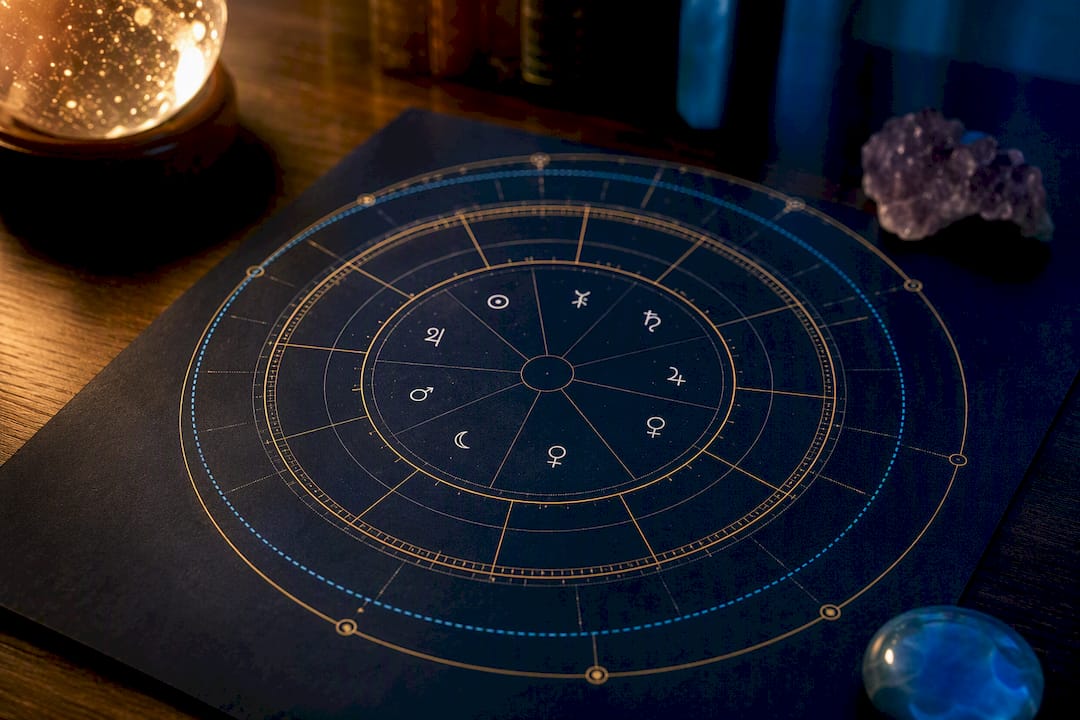
The strongest relationship readings don’t pick one method. They layer all three. Start with synastry to see how you each experience one another, move to the composite to understand what that interaction actually produces, and pull in a Davison chart when you want to know about timing or a specific year ahead.
- Read synastry first for interaction and chemistry.
- Read composite second for the relationship’s identity and purpose.
- Read Davison third, only when timing or progressions are the actual question.
- When composite and Davison agree on a theme, treat that as a strong signal. When they diverge, read each for what it specializes in rather than forcing a single answer.
When a Live Reading Beats Guessing at Your Chart
If your composite Moon and Davison chart seem to disagree, or if a birth time is a rough guess, don’t force a conclusion from the wheel alone. That’s when a professional set of eyes matters more than another article. Phone Psychic Readers connects you with hand-vetted astrology readers available 24/7 who can talk through conflicting indicators in real time. Get a live reading whenever the chart raises more questions than it answers, especially around angles, uncertain times, or emotionally loaded aspects you want a second opinion on.
— Jason
Ready to Talk Through Your Composite Chart With a Real Reader?
Reading a wheel and an aspect grid gets you most of the way there, but a composite chart with an uncertain birth time or a cluster of hard aspects can leave you second-guessing yourself. You can get more personalized help than a static chart calculator offers: a live conversation with an experienced astrology reader who can weigh in on your specific placements, ask follow-up questions, and help you sort a genuine growth edge from a real red flag, available around the clock without an appointment.

That interactive back-and-forth matters most when birth times are shaky or when composite and Davison seem to be telling different stories, exactly the moments where a calculator alone falls short. If your composite chart points to a partnership worth understanding more deeply, a relationship psychic reading by phone lets you walk through your specific placements with someone experienced in reading relationship dynamics rather than individual charts. You can also compare notes on compatibility more broadly through an astrology compatibility reading if synastry questions come up alongside your composite ones. Book a session and get answers tailored to your actual chart, not a generic guide.
Where to Verify Your Composite Chart Calculations
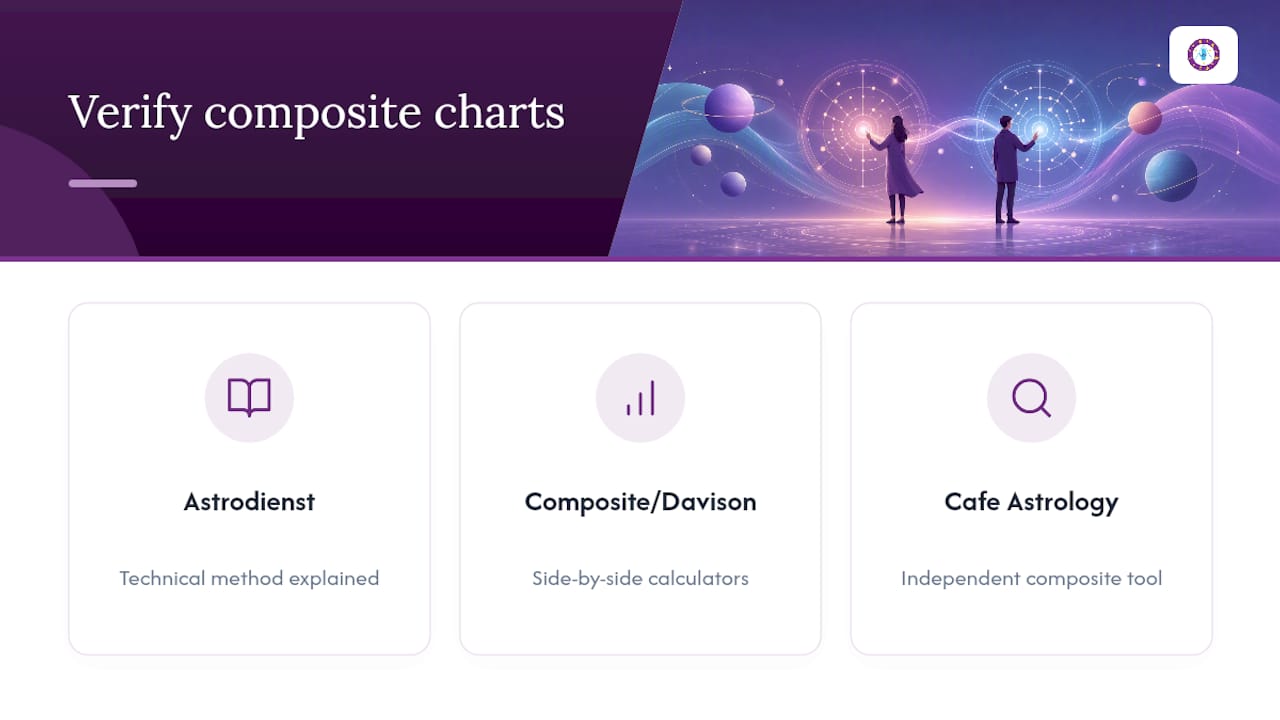
Run your own chart and compare methods directly using Astrodienst’s Astrowiki entry on composite charts for the technical method, the composite and Davison calculator for side-by-side results, and Cafe Astrology’s composite chart tool for a second calculation to cross-check.
Sources
- Composite Chart - Astrodienst Astrowiki
- Free Composite Chart Calculator — Composite & Davison
- Cafeastrology
FAQ
How Do You Read a Composite Chart?
Start with the composite Sun for purpose, the Moon for emotional climate, the Ascendant for public appearance, then move to the three tightest aspects before layering in Venus, Mars, Saturn, and house emphasis.
How Can I Calculate My Composite Chart?
Enter both birth dates, times, and locations into a composite chart calculator, which finds the midpoint between each matching planet and angle; without exact birth times, the resulting houses and angles should be treated as tentative.
How Do You Interpret a Progressed Composite Chart?
A traditional midpoint composite chart isn’t meant to be progressed the way a natal chart is. If you want to track relationship timing through progressions and transits, use a Davison chart instead, since it’s built from a real point in time.
How Can I Identify True Love in a Composite Chart?
No single placement confirms lasting love, but a well-aspected composite Sun and Moon, a Venus-Mars connection that supports rather than fights, and Saturn placements that show commitment rather than avoidance are strong combined signals. When the signs conflict, a live astrology reading can help you weigh what matters most for your specific situation.