
Clairvoyant vs Medium: 4 Questions to Ask Before a Phone Reading
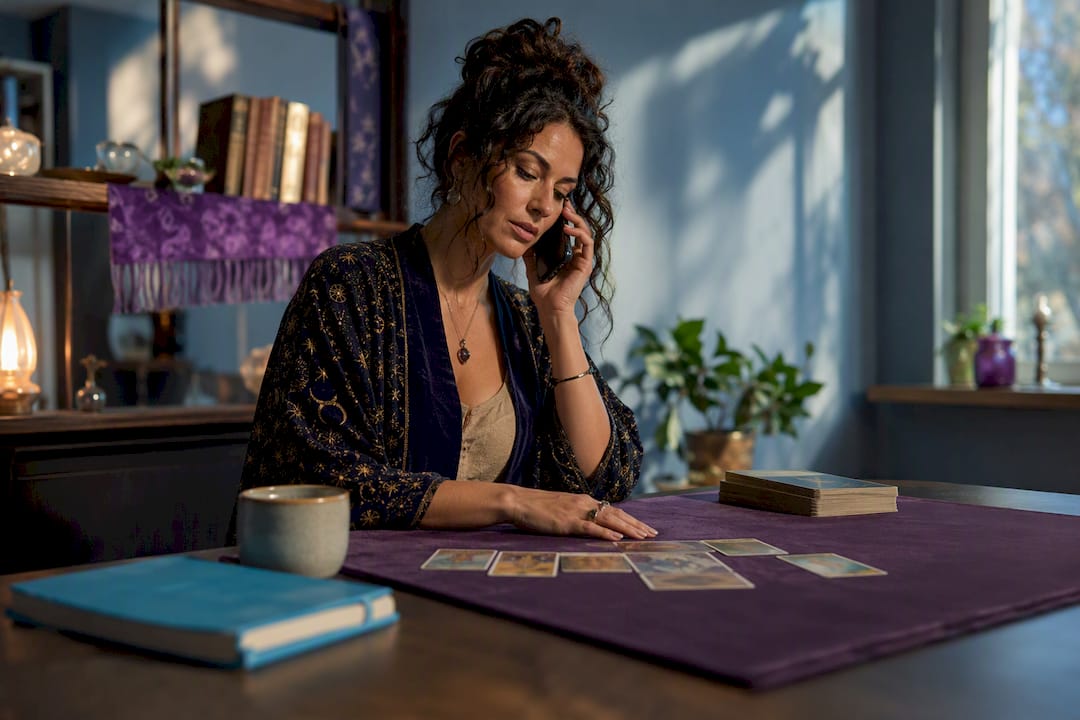
A psychic offers broad intuitive insight into your life, a clairvoyant reports visual impressions about people or events, and a medium claims to communicate with the deceased. If you want closure or a message from someone who has passed, book a medium. If you want guidance on a decision, relationship, or career move, a clairvoyant or general psychic reading fits better. The rest comes down to overlap and preparation.
Key Takeaways
- Clarify whether the reading aims to contact a deceased person or to gain insight into current life decisions, as practitioners often specialize differently.
- Ensure the practitioner’s focus aligns with your goal, such as asking explicitly if they attempt named contact for grief or if they provide general guidance without mediumship.
- Remember that clairvoyance relates to present objects or events, not future predictions, so ask if the reader specializes in forecasting before seeking that type of impression.
- When booking, ask about the practitioner’s specialty, whether they work as a medium, clairvoyant, or both, and confirm the session format upfront to prevent surprises.
- Use vetted services that screen readers for experience and honesty, and review pricing details, first-time discounts, and the practitioner’s limits to meet your expectations.
Table of Contents
- Clairvoyant vs Medium: How Each Term Is Actually Defined
- Why ‘Channel’ and ‘Target’ Are the Two Words That Actually Matter
- How Do You Pick the Right Reading for Your Goal?
- What Actually Happens During a Session
- A Practical Take on Booking a Phone Reading
- Get a Phone Reading From a Vetted Clairvoyant or Psychic
- Sources
- FAQ
Clairvoyant vs Medium: How Each Term Is Actually Defined
“Psychic” works as an umbrella term. It covers a wide range of intuitive practices, including tarot, energy reading, and general life guidance, and both mediums and clairvoyants can technically be described as psychics, according to a Dictionary. When someone books a “psychic reading” without more specifics, they are usually asking for input on relationships, career decisions, money, or general direction, not contact with a specific deceased person.
Clairvoyance is narrower. Britannica defines it as purported knowledge of an object or event gained without using the ordinary senses. The Parapsychological Association’s technical definition draws a sharper line: clairvoyance is information about a physical object or a contemporary event, obtained from an external physical source. That last part matters. It is distinct from precognition, which claims to see the future, and from telepathy, which claims to read another person’s mind. A clairvoyant reading a photo you hold up on a video call, or describing impressions tied to your current situation, fits that narrower definition. A reading that promises to reveal next year’s lottery numbers does not.
Mediumship is a different job entirely. Britannica’s entry on mediums describes the role as reputed contact with the spirits of the dead, historically practiced through several modalities:
- Séance work, where a group setting is used to attempt contact
- Trance mediumship, where the practitioner claims to let a spirit speak or act through them
- Mental mediumship, where impressions, names, or messages are received and relayed verbally, without a trance state
- Automatic writing, where the medium writes messages attributed to a spirit rather than speaking them
None of this rises to scientific proof. Research has not produced conclusive support for clairvoyance as an established phenomenon, and the same caution applies to mediumship claims. Every reading, whether labeled psychic, clairvoyant, or mediumship, is best understood as an interpretive, belief-based experience rather than a verified method for confirming facts.
Why ‘Channel’ and ‘Target’ Are the Two Words That Actually Matter
Most booking confusion comes from mixing up two different questions: how information supposedly arrives, and who or what it’s about. Clairvoyance describes the channel, meaning visual impressions received by the practitioner. Mediumship describes the target, meaning communication aimed at a specific deceased person. A practitioner can offer one, the other, or both.
That’s where labels like “clairvoyant medium” or “psychic medium” come from. Someone using that title claims to receive visual impressions (the clairvoyant part) that relate specifically to a deceased loved one (the mediumship part), rather than to your current life circumstances. A clairvoyant session and a mediumship session can look similar from the outside; both might involve the practitioner describing images or sensations out loud. The difference is what those impressions are supposed to be about.
Before booking, run through this quick checklist:
- Name your goal first. Are you trying to reach someone specific, or trying to get clarity on a live decision?
- Ask what the practitioner specializes in. Some readers focus entirely on relationship and career questions and don’t claim mediumship at all.
- Ask whether they attempt named contact. If your goal is grief-related, confirm the reader actually works with deceased communication rather than general intuition.
- Confirm the format. A mixture reading (part clairvoyant, part mediumship) should be stated up front, not discovered halfway through the call.
Pro Tip: Don’t assume “clairvoyant” means “can predict my future.” Under the technical definition, clairvoyance is about present objects and events, not forecasts. If prediction is what you want, ask directly whether the reader works with that kind of impression before you connect.
How Do You Pick the Right Reading for Your Goal?
The simplest rule: match the goal to the specialist, not the other way around. Grief, closure, or a sense of connection to someone who has died points toward a medium. Practical questions about relationships, career timing, or money decisions point toward a clairvoyant or general psychic reading, since these are framed as customary spiritual-practice guidance rather than scientifically established outcomes.
Before you dial in, ask a few pointed questions:
- What’s your specialty, and do you consider yourself a medium, a clairvoyant, a general psychic, or a mix?
- Do you attempt to contact a specific named person, or do you work with general impressions?
- How is the call billed, per minute or per session, and is there a first-time rate?
Preparation matters as much as the questions you ask the reader. Limit how much personal detail you share before the call starts. Write down one to five focused questions in advance so the conversation doesn’t drift, and set a firm time or spending limit before you pick up the phone. Our guide to what to expect from a first phone reading walks through this in more detail, and a shortlist of specific questions that tend to get useful answers can help you avoid a vague, unfocused call.
A safety note worth repeating: these readings are interpretive experiences, not a substitute for medical, legal, or financial professionals. If a reader pressures you into repeated paid sessions, especially around grief, treat that as a warning sign and end the call.
What Actually Happens During a Session
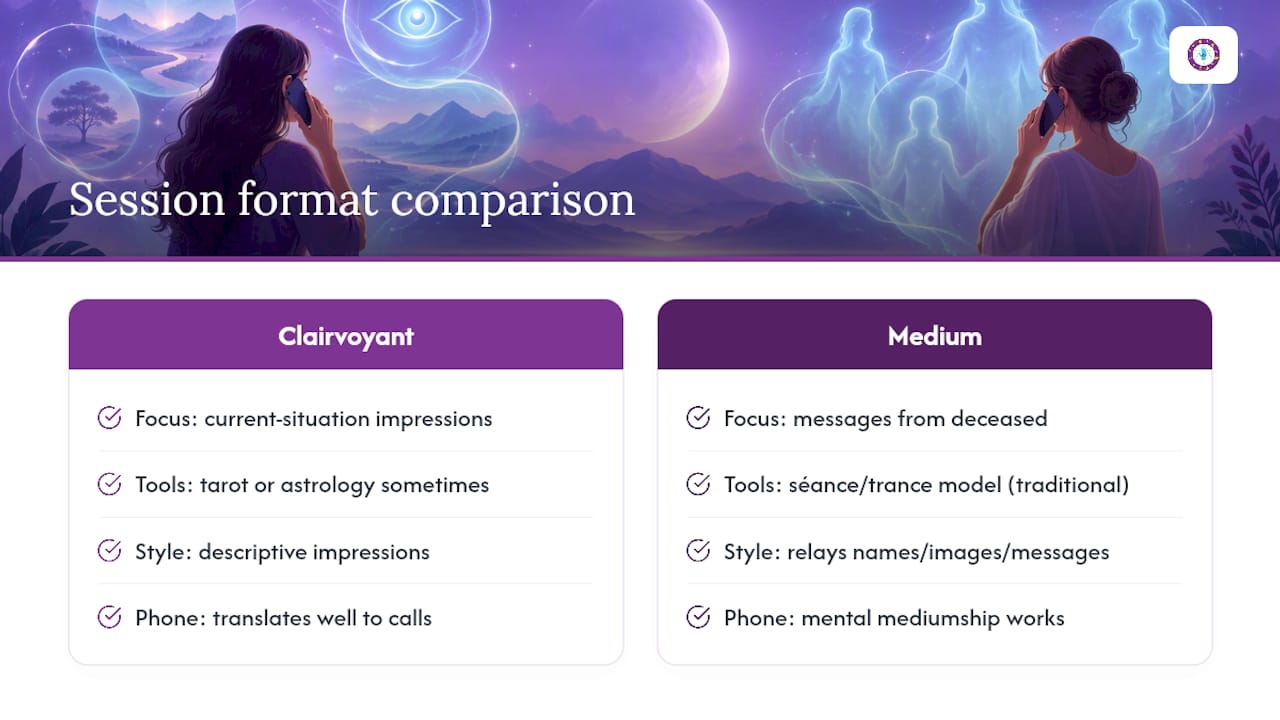
A phone clairvoyant reading typically involves the reader describing impressions tied to your current situation, sometimes supported by tools like tarot cards or astrology. A mediumship session, especially one modeled on traditional séance or trance work, often centers on relaying names, images, or messages the reader attributes to a specific deceased person.
Phone sessions compress these formats. There’s no group séance over the phone, but mental mediumship (spoken impressions, no trance) translates well to a call, as does clairvoyant-style reading. Expect the reader to ask a few grounding questions, then describe what they’re picking up. You can learn more about how clairvoyant impressions differ from other intuitive channels if you want to dig deeper into the mechanics before booking.
A Practical Take on Booking a Phone Reading
A phone reading works well once you know your own goal. Are you chasing closure with someone who’s gone, or clarity on a decision in front of you? That single question should decide whether you look for a medium or a clairvoyant, not the other way around.
Vetting matters more than most callers realize. A service that screens readers and stays available 24/7 gives you a better shot at a focused, honest session than a random directory listing.
— Jason
Get a Phone Reading From a Vetted Clairvoyant or Psychic
You can find phone-based psychic readers available at any time, so you’re not stuck waiting for an in-person appointment to get clarity on a decision or a connection you’re seeking. Applicants for phone psychic readings often undergo a vetting process to ensure reader experience and focus during calls.
Before you book, check the reader’s stated specialty, confirm how billing works, and ask about any first-time caller discount. If your goal is a clairvoyant-style reading focused on relationships, career, or a decision you’re facing, start with the clairvoyant reading page to see live availability and connect with a reader who fits what you’re looking for.
Sources
FAQ
Can a Clairvoyant Also Be a Medium?
Yes. A practitioner can combine both roles, often advertised as a “clairvoyant medium,” meaning they receive visual impressions specifically tied to a deceased loved one rather than to your current circumstances. Ask directly which target the reader focuses on before booking.
What Are the Three Types of Mediumship?
The most commonly cited categories are trance mediumship, mental mediumship, and physical mediumship (which historically includes séance work and automatic writing), according to Britannica’s entry on mediums. Mental mediumship, spoken impressions without a trance state, is the format that translates most naturally to a phone call.
What’s the Difference Between a Medium and a Spiritualist?
A medium is a practitioner who claims to communicate with the deceased, while Spiritualism is a broader religious and philosophical movement built around the belief that such communication is possible, as Britannica’s overview of Spiritualism explains. Not every medium identifies as a Spiritualist, and not every Spiritualist works as a practicing medium.
Why Does God Forbid Mediums in Some Religious Traditions?
Some Christian denominations point to Deuteronomy 18:10 through 12, which lists divination and consulting spirits among prohibited practices in that translation. Interpretation of this passage varies widely by denomination, so the objection is a religious one, not a universal legal or scientific finding.
How Much Does a Phone Psychic or Clairvoyant Reading Cost?
Pricing varies by reader and session length, and current rates are listed on the psychic reading page and clairvoyant reading page. First-time callers are typically offered a discounted rate, so it’s worth checking the live pricing before you connect.